66% of Singaporeans in their 20s own a side hustle[1]. At the same time, a third of our startups fail within 2–5 years[2]. These statistics help explain why there are frequent warnings about turning your hobbies into businesses[3].
However, there exist also individuals who managed to monetise their passion. CNA[4] featured a few like Amanda Pang, who works full-time and sells handcrafted stamps on the side.
Perhaps the key does not lie in whether to do it or not, but in how you do it. As someone who also attempted to do the same, I want to divulge 3 mistakes so that anyone with a kindred ambition can do better, faster.
Before that, a quick introduction to my business, Mind Recyclables
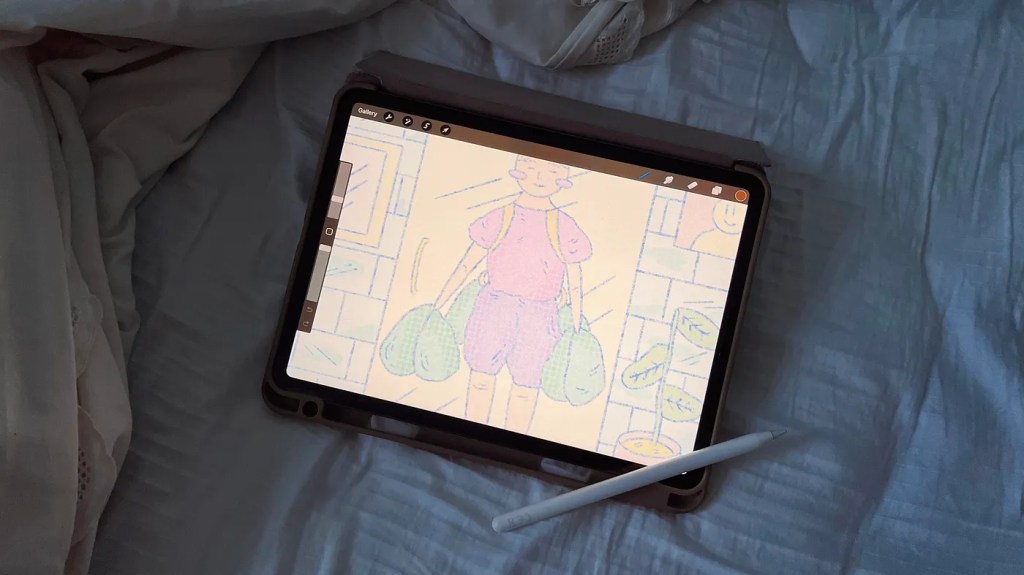
In 2021, I noticed a gap where trendy illustrations lack meaningful messages that encourage and inspire by speaking to life struggles. I was also enlightened by the fact that our brain has plasticity, or the ability to change.
Both resulted in Mind Recyclables, where I make designs to encourage a positive transformation of mindsets.
Though Mind Recyclables started 2 years ago, I only took its growth seriously 6 months ago. Therefore, I’m nowhere near making a sustainable profit as of now.
But I’ve managed to see a steady growth of followers over the past few months, bringing me closer to my dream of making it a profitable business. The average engagement rate of my content has also become higher than the industry average (14% versus 3%[5]).
This makes me confident of Mind Recyclables’ potential to succeed once I have greater capital and capacity to expand it. At the same time, I’m also somewhat regretful because the growth could have come earlier had I not made the following mistakes:
Mistake 1: Not having a structured strategy
It is easy to dream big and not have a plan when it comes to our passion. Even more so when we’re no longer under an institution, like at school or the workplace, where we need a clear outline before executing our ideas. Hobbies do not require structures or systems because they are inherently “for fun”[6].
Yet, when turning hobbies into something more, not having a structured strategy is a mistake because we will be inefficient.
We strategise to assess our resources and to identify achievable actions to overcome limitations and conquer goals. If we neglect this essential step, we expend energy on unrelated activities that bring in a low ROI[7].
2 months ago, various YouTubers in the same industry swayed me with the following advice: Put your products on the market as soon as possible to iterate. Motivated to make a profit of at least $1000 through my latest launch, I jumped straight into burning time, money and energy on creating new products.
It was a huge mistake because our businesses operated in different contexts and our resources were not comparable. They already had a huge following to begin with and were able to achieve greater sales with more ease.
Plus, they were also sharing tips on different platforms that they were using so it was not applicable to me.
At that time, I had less than 300 followers. So, looking back, it is not surprising to only receive orders from supportive friends and family instead of my other followers.
I found that taking a step back to evaluate our resources and the unique situation of our business to devise a tailored approach works better.
For me, using the marketing funnel helped to clarify which strategy was the most relevant. It describes a customer going through stages of interaction with a brand before sales[6], the first of which is attaining brand awareness.
I had been doing it the other way round by focusing on the final stage of sales instead of building a strong foundation of brand awareness. So, over the past month, I shifted the focus to advertising and making content that mobilises existing followers to share the brand instead.
It brought clarity that paid off; I saw progress in the direction of my goal to make a profit. There was a greater growth rate in followers and I also eventually received orders from some of them.
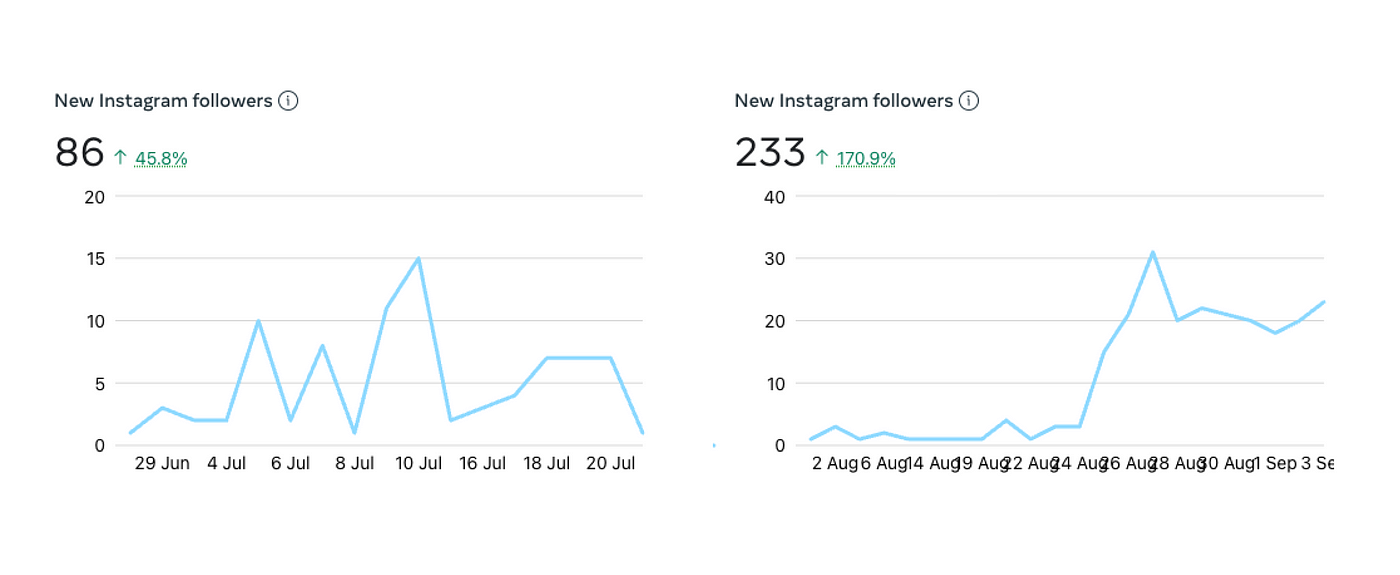
This shows that it is not enough to have an end in mind. You need a well-defined strategy to have a realistic perspective on how you can optimise your resources and overcome limitations to reach goals.
Mistake 2: Not measuring your efforts
Now that we have an established game plan, we also need to continuously measure our efforts to ensure that we’re moving in the right direction. It would be a mistake not to do so because we will not fully understand their effectiveness and recalibrate as needed.
Success metrics will differ depending on business needs and circumstances. In the case of Mind Recyclables, engagement rates were relevant for me but there might be other metrics better suited for your unique business goals.
Previously, I was not measuring the engagement rate of my content at all. I was churning out illustrations according to whatever inspiration I had that week. The consequence is that I never knew whether my work would pay off until I shared it on social media.
However, since Mind Recyclables needed to persuade existing followers to share and help build brand awareness, I had to find out what drives the action. To do so, I measured the engagement rates of my past works to identify factors of success.
To maintain the integrity of the data, I observed only the posts that I had not pushed out for advertising. I compared 2 of my best and worst posts according to their engagement rates and I’ve noticed that the one with the following factors prompted more interactions:
- A storyline that provides an insightful alternate perspective
- Gets to the point within 2–3 images
- Has a cultural reference
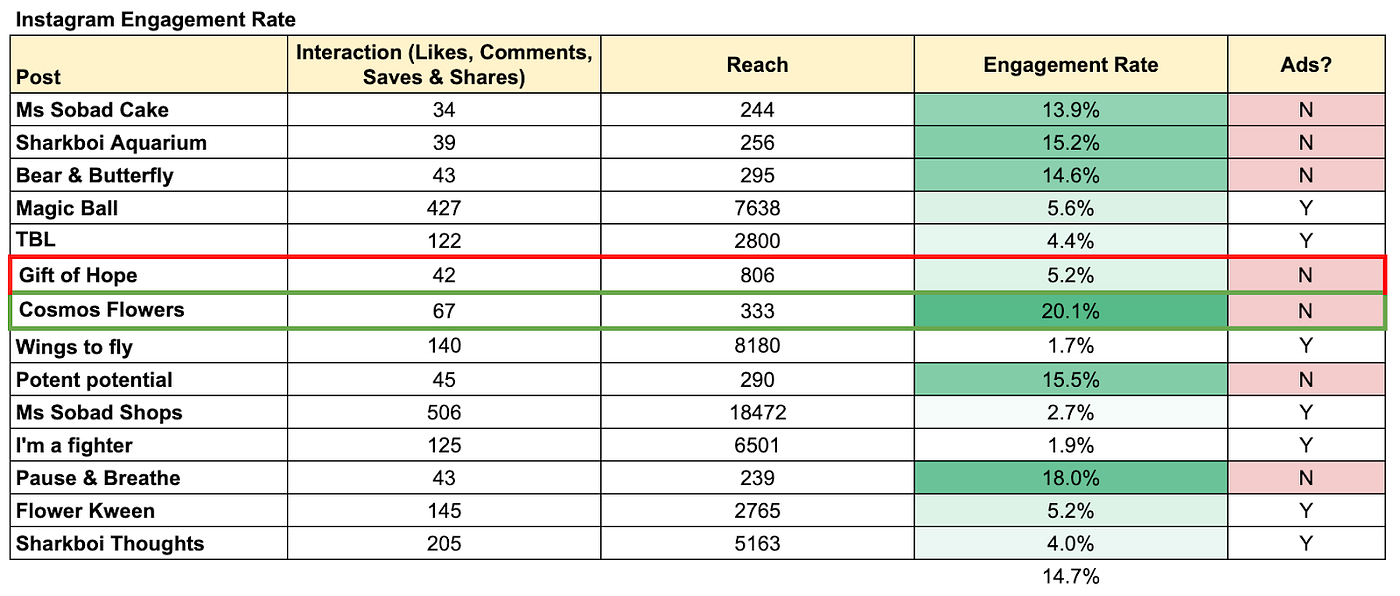
Incorporating these pointers into my content strategy has also made it much easier to brainstorm. It also gave me greater confidence in the success of each post. The consistently high quality of interaction with every content thereafter affirmed my belief.
Don’t put yourself through my mistake. You’ve done half the battle by formulating a strategy — don’t waste your progress. Determine the appropriate measurement methods for you to make sure you’re on the right track.
Mistake 3: Not bracing for times of low motivation
Not bracing for times of low motivation is a mistake because we will lose resilience and give up ahead of time.
Many arguments against this endeavour usually involve something like: “A hobby is no longer a hobby once you add a price tag. That’s a job.”[7] This is because we’re turning something that we do for fun into real work. It can sap our creativity and initial enjoyment[8].
I’ve experienced this difficulty too. As mentioned, I used to create based on pure inspiration. My work hinged on unreliable feelings instead of a robust system of production.
When I was not in the mood, Mind Recyclables’ social media accounts were inactive. This explains why it was difficult to build up a strong following. Without consistent engagement, I lost the attention of my followers and their interests. I MIA-ed and “gave up” for nearly a year.
So, I understand where dissenters of turning passion into profits are coming from. But I still believe there are ways to work around this conundrum. Personally, I have 3 methods to deal with it: (1) Exploit times of high creativity, (2) seek out inspiration from others and (3) just do it.
I exploit seasons of high creativity by recording every thought of inspiration that comes in a list. These are times where fresh ideas arrive faster than I can implement them. I save them in a list so that it comes in handy as references to sustain my work when I’m in a rut.
It also helps to take a break at times and observe how others work. Don’t compare but learn to simply appreciate. I find fellow artists’ fervour contagious and that usually helps to reignite my motivation.
Finally, Nike’s right — just do it. I know, lame. But hear me out. Research has shown that motivation follows action[9], and not the other way round.
So, even when it’s difficult to feel like starting, commit to the action and you will soon feel different. This will build resilience, an important trait to have for success in the long-run.
Whatever method you choose, the key is to be intentional. Yes, passion may be fickle, but our work doesn’t have to be. Figure out what works best for you, plan around your weaknesses and this passion project will be sustainable.
Start now, not later
No matter which business stage you’re at, I want to encourage you to have a structured strategy, measure your efforts and brace for times of low motivation.
I felt regret for not realising these mistakes when I started writing this article. But I’ve come to see that they don’t define us; what we choose to do afterwards matters more.
So be brave and courageous, and make room for growth. It is not an easy or linear progress but it’s what makes the journey worthwhile. Everyone starts somewhere, and you can choose to start today.
 Vanesse Tang
Leave a comment