I called it self-care, but I was really just indulging in junk food to ease my stress.
But instead of feeling better, I felt guilty for the unhealthy food I had wolfed down on impulse.
I regretted my choices and resolved to practice restrain, just to repeat the cycle a few weeks later during another high-stress period.
If you’re anything like me, eating yummy but processed snacks was the way to cope with tough times.
But it came with a price: my skin broke out, my digestion took a hit, and I felt worse every time I overindulged.
I knew I needed a change, but diets felt restrictive, and I didn’t want to pay for tracking apps that needed overwhelming commitment.
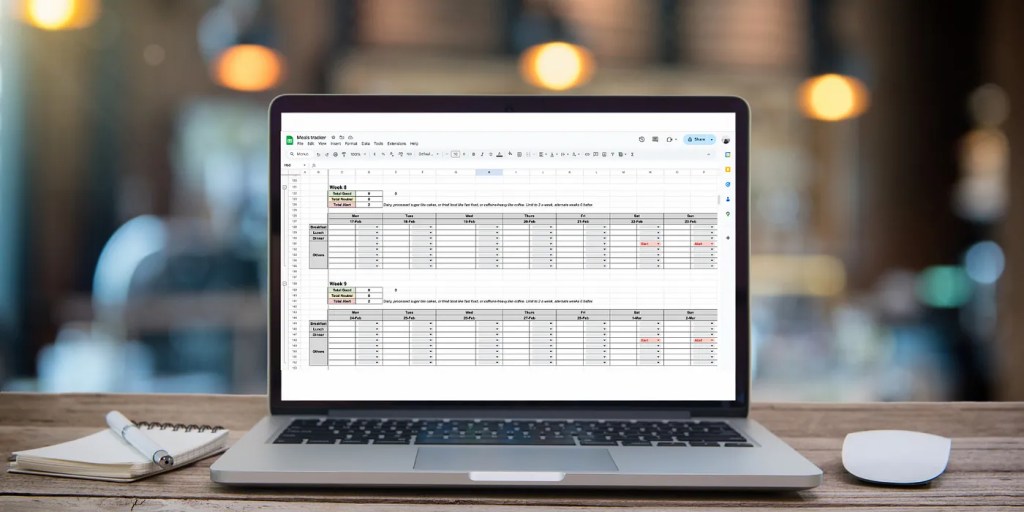
That’s when I turned to something simple yet effective: a spreadsheet!
Stress eating didn’t have to control me anymore, and the best part? The solution was FREE, straightforward and easy to maintain.
Let me show you how I used Google Sheets to regain control over my eating habits, why it works, and how you can get the free template!
How this meal tracker template works
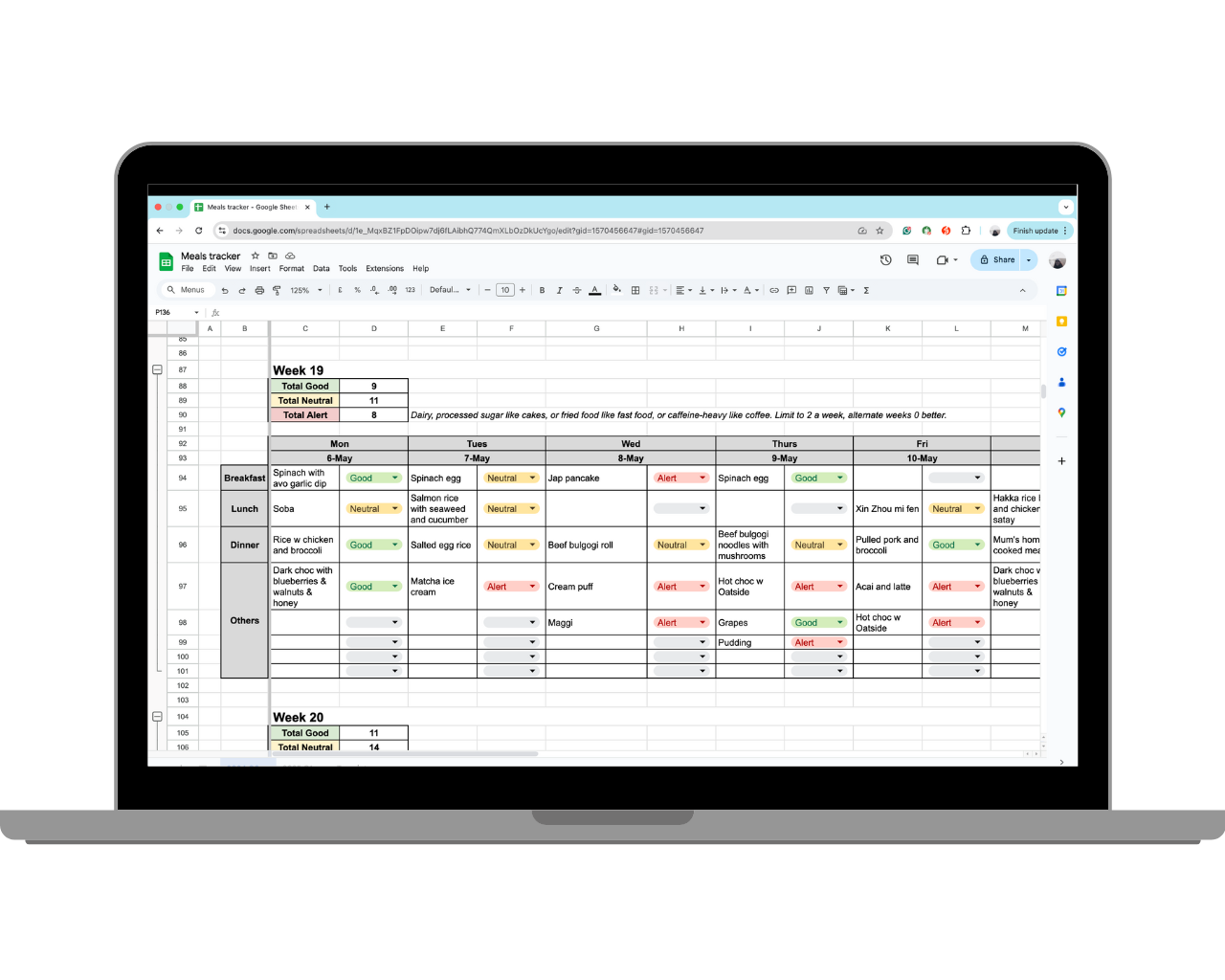
The Google Sheets template is simple but incredibly effective. I log all my meals and snacks daily into a table. Alongside each item, I tag them using three labels: Good, Neutral, or Alert.
- Good: Foods that are nutritious and wholesome, like fruits, vegetables, or home-cooked meals.
- Neutral: Foods that are okay in moderation. Perhaps a slightly indulgent meal that isn’t entirely unhealthy, like pasta or a sandwich.
- Alert: Foods that I consider red flags, such as processed snacks, sugary treats, or fried items that don’t nourish me.
The template also displays a summary of how many Good, Neutral, and Alert meals I had eaten each week. This simple breakdown gave me a bird’s-eye view of my eating patterns, helping me identify areas to improve without feeling overwhelmed.
But what made it truly effective was its ability to help me plan ahead.
Since I usually indulge in some desserts with my friends and loved ones during social events, I’d mark meals on those days as Alerts in advance.
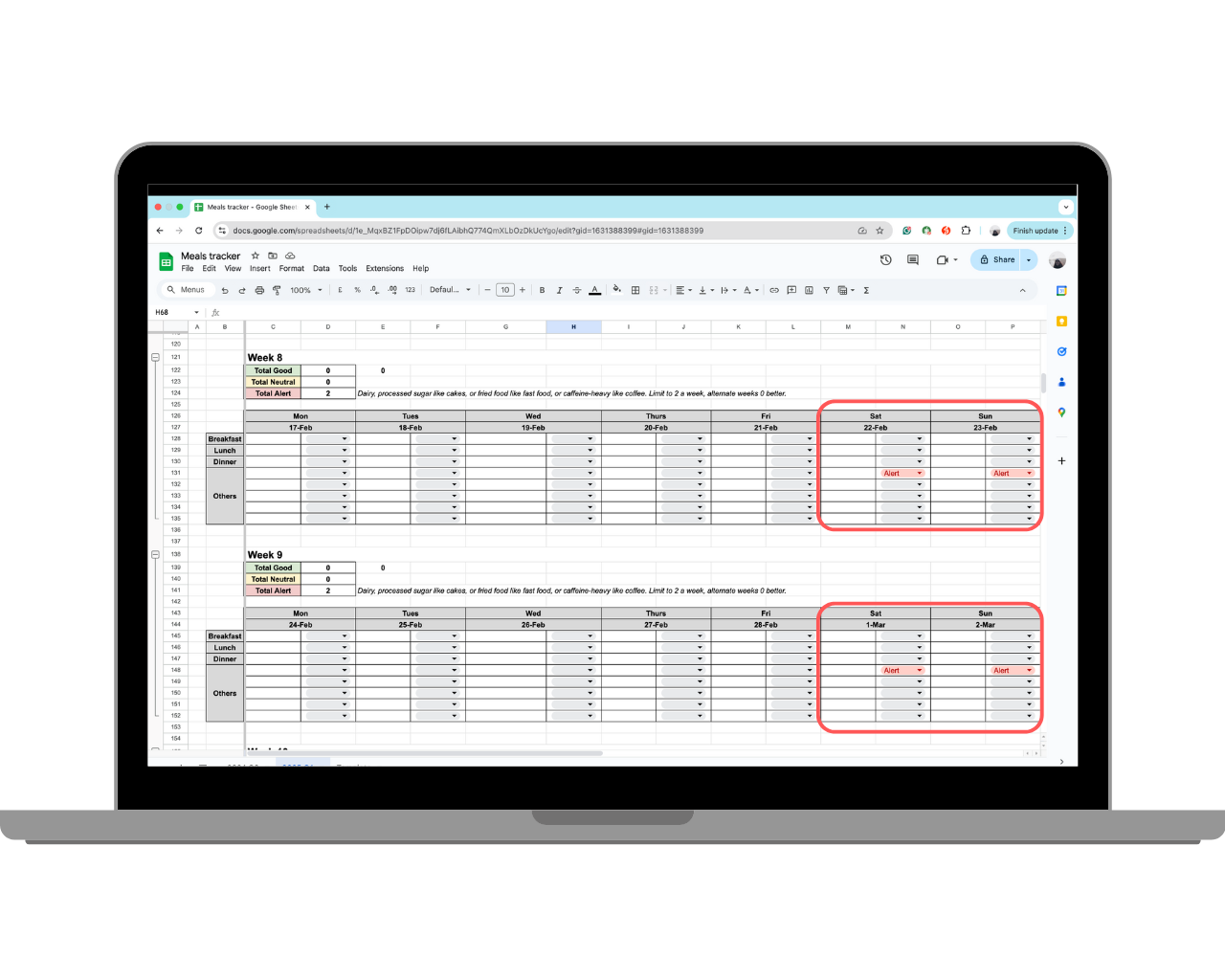
Knowing that I’d be eating desserts on those days informs me to practice more self-control during the rest of the week. It also helps me to plan healthier meals for the other days to maintain a balanced diet.
This system allowed me to make more mindful choices throughout the week so that I could enjoy indulgent moments with family and friends guilt-free.
Why tracking my meals like this works
In the bigger picture, this template worked because it wasn’t just about tracking. It was about changing my approach to food.
1. Its simplicity makes me consistent.
This system was low-effort and straightforward, unlike calorie-tracking apps that require detailed input like exact portions or nutritional breakdowns.
All I had to do was record what I ate and assign a tag; no need to count calories or analyse macros.
This made it easier to stick to, especially on hectic days when logging every detail felt overwhelming.
2. It shifted my focus to balance, not restriction.
By allowing space for occasional treats, the system helped me ditch the all-or-nothing mindset.
Instead of guilt-tripping myself after an indulgence, I started seeing it and planning for it as part of a larger plan to eat better in the long run.
This gave me the balance I was looking for: enough structure to guide my eating habits but enough flexibility to enjoy life.
3. It turned eating into a learning process.
Over time, I also started spotting patterns in my eating habits. I noticed what triggered stress eating and which foods left me feeling good versus sluggish.
This awareness made it easier to avoid certain foods or situations and reinforced healthier choices.
What benefits did I get out of this habit?
Reduced Impulse Eating
The first thing I noticed was how tracking my meals made me pause before reaching for junk food. Writing everything down was a simple but powerful way to stay mindful.
It gave me the space to think, “Will this be helpful in the long run?”
This pause helped me step back from impulsive decisions and reflect on whether eating that snack aligned with my goals. This made it easier to avoid rash decisions.
Fewer Guilty Feelings
I no longer felt anxious about food or trapped in cycles of overindulgence and regret. The system helped me take control, knowing I could enjoy occasional treats without going overboard.
Tackling Stress at Its Root
As I stuck with this habit, I realized my eating patterns were tied to how I handled stress.
Instead of snacking, I began leaning on my loved ones for support, exercising regularly, and exploring other hobbies that brought me joy.
Shifting my focus to these healthier outlets didn’t just help with eating. It changed the way I approached challenges altogether.
Healthier Body, Healthier Relationships
Taking care of my eating habits helped me take care of myself overall. I felt healthier, more energetic, and more present for the people around me.
By putting myself first, I had more to give to my relationships.
Try it for yourself!
The simple act of tracking my meals in a spreadsheet didn’t just help me manage my stress-eating; it sparked a broader transformation in how I approach my health, my time, and my relationships.
By giving myself the space to think before making decisions, I regained control over my eating habits, reduced anxiety, and found healthier ways to cope with stress.
If you’re looking for a simple and effective way to regain control over your eating habits, I highly recommend this method.
You can copy my Google Sheets template here and start tracking today. It’s free, easy to set up, and could be the small change that leads to big results in your life.
 Vanesse Tang
Leave a comment